
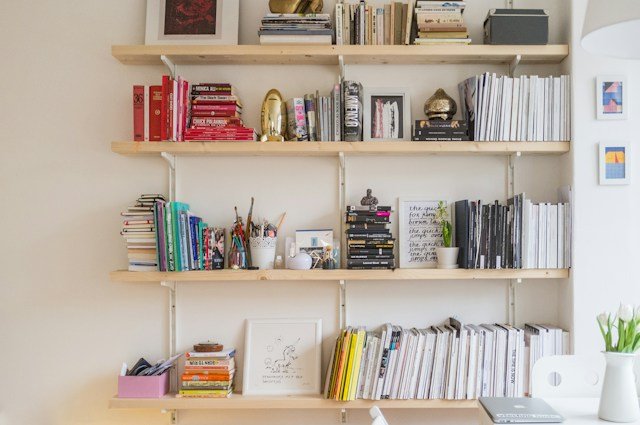
The instinct is always to buy another bin. The actual fix is almost always to own less of what’s already filling the bins you have.
Small-space organizing content online has a predictable pattern: a beautifully styled closet, a wall of matching baskets, a caption suggesting that the right storage system will finally make everything fit. It’s an appealing idea, mostly because it doesn’t require getting rid of anything — just buying smarter containers for what’s already there. The problem is that it rarely works, because the underlying issue was never a lack of storage. It was having more stuff than the space was ever going to comfortably hold.
This isn’t a guide about clever storage hacks or furniture that hides more things inside it. It’s about the sorting step that almost always gets skipped, and what to actually do room by room once that step is done. None of it requires purchasing anything new.
It’s worth saying plainly: this isn’t about minimalism as an aesthetic or a lifestyle philosophy. It’s a practical response to a specific problem — a space that feels smaller than it actually is, because it’s carrying more than it needs to. The fix is almost always subtraction, not a better system for addition.
Why more storage usually makes the problem worse
Adding storage to a space that’s already too full doesn’t solve the underlying problem — it just makes the clutter easier to close a door on. A new set of bins gives disorganized items a tidier-looking home, but the volume of stuff hasn’t changed, and the apartment still feels just as tight. Worse, new storage often becomes its own category of clutter once the novelty wears off and it stops getting used the way it was intended.
There’s also a cost that’s easy to overlook: every new bin, shelf, or organizer takes up floor or wall space of its own. In a small apartment, that space is often more valuable empty than filled with a container meant to solve a problem the container itself is now contributing to. A studio with one fewer piece of furniture frequently feels larger than one with an extra shelving unit crammed with sorted clutter.
The better order of operations is sorting first, storing second. Once there’s genuinely less to store, most small apartments turn out to have more usable space than expected, using furniture and shelving that was already there.
Sort everything into three piles first
Before organizing a single drawer, everything worth reconsidering gets sorted into one of three categories. This step alone usually does more to free up space than any storage purchase would.
Keep
Used within the last year, or clearly meaningful enough to justify the space it takes up.
Donate or sell
In good condition but unused for over a year — someone else will get more value from it than a closet shelf will.
Store elsewhere
Seasonal or occasional-use items that don’t need to live in daily, high-traffic space.
The middle category is usually where the most space gets reclaimed, and it’s also the one people are most tempted to skip. Genuinely asking whether something has been used in the last twelve months, rather than whether it might theoretically be useful someday, makes this sorting step much faster. It also helps to sort in short sessions — one drawer or one shelf at a time — rather than emptying an entire closet at once, which tends to create a bigger mess than it resolves and often gets abandoned halfway through. Setting a timer for twenty minutes per session, then stopping regardless of progress, keeps the task from feeling endless and makes it far more likely to actually get finished across a few sittings rather than abandoned after the first overwhelming attempt.
Three questions to ask before keeping anything borderline
Have I actually used this in the past year, not just thought about using it?
If this broke or disappeared today, would I go out and replace it?
Am I keeping this because I want it, or because getting rid of it feels wasteful?
That third question tends to be the most revealing. A lot of clutter isn’t kept out of love for the object — it’s kept to avoid the discomfort of admitting a past purchase didn’t work out. Letting go of that discomfort is usually what actually clears the shelf.
A useful trick for genuinely uncertain items: put them in a labeled box for thirty days rather than deciding immediately. If nothing from the box gets retrieved in that time, it’s a fairly reliable sign the item wasn’t needed in daily life, and it can move straight to the donate pile without further debate. This trick works especially well for sentimental-adjacent items — not quite treasured keepsakes, but not obviously disposable either — where the hesitation usually comes from uncertainty rather than genuine attachment.
Room by room: what actually helps
Entryway
This is the space that gets cluttered fastest because it’s the first surface anything touches when it enters the apartment — mail, keys, shoes, bags. A single shallow tray for keys and mail, placed exactly where hands land when walking in, prevents most of that pile before it starts. Shoes are usually the biggest entryway offender; a simple rule of only what’s worn in the current season staying by the door keeps the rest from accumulating. Everything else — winter boots in summer, sandals in winter — belongs in the “store elsewhere” category from the sorting step, not underfoot year-round.
Kitchen
Small kitchens fill up fastest with duplicate tools and single-use gadgets. Anything that only does one very specific job — a dedicated avocado slicer, a single-use egg cooker — is worth questioning against how often it actually gets used compared to the drawer space it occupies. Counters tend to feel more spacious simply by relocating anything not used daily into a cabinet, even without removing a single item. Vertical space above cabinets, often left empty, is also a reasonable spot for the “store elsewhere” pile of occasional-use items like a holiday roasting pan.
Bedroom
Closets are usually the most over-stuffed room in a small apartment, largely because clothing is one of the easiest categories to keep “just in case.” Turning hangers backward at the start of a season and flipping them forward only after actually wearing something is a simple, visual way to see what’s genuinely getting used over the following few months, without needing to guess. Under-bed space, often overlooked, works well for the seasonal storage category once it’s been trimmed down through sorting rather than treated as an extension of the closet.
Living room
This room often becomes a catch-all for things with no other clear home — chargers, remotes, mail, random objects carried in from other rooms. A single designated container, even something as simple as a basket already owned, gives these items one place to land instead of spreading across every surface. The goal isn’t eliminating clutter entirely, just containing it to one spot that’s easy to reset. Coffee tables and side tables tend to look larger the moment anything without a clear daily purpose gets moved off them and into that container.
Bathroom
Half-used products are the biggest space drain in most small bathrooms. A quick pass through anything expired, or any product tried once and abandoned, usually frees up more shelf space than any new organizer would. What’s left tends to fit easily into the storage that’s already there. Medicine cabinets in particular benefit from this pass, since expired items tend to accumulate there unnoticed for years at a time.
The one-in, one-out rule
Once the sorting is done, the easiest way to keep it that way is a simple rule: when something new comes in, something comparable goes out. A new sweater means an old one gets donated. A new mug means a chipped one leaves the cabinet. This one habit does more to prevent re-clutter than any organizing system, because it stops the problem from rebuilding in the first place. It also removes a lot of decision fatigue around future purchases — knowing that anything new requires giving something up naturally slows down impulse additions to an already full space.
Organizing a small space with roommates or family
Shared spaces add a layer the sorting method above doesn’t fully cover on its own: not everything belongs to one person, and not everyone will be equally motivated to sort at the same time. Rather than trying to organize someone else’s belongings, it tends to work better to handle personal items first and lead by example in shared areas, since a visibly calmer living room or kitchen counter is often more persuasive than any conversation about clutter. Forcing someone else’s sorting timeline rarely works and tends to create more household friction than the clutter itself ever did.
For shared storage, dividing space by person rather than by category avoids a lot of friction — one shelf per person in a shared closet, for instance, rather than a single system everyone is expected to maintain the same way. This makes it clear whose responsibility a given pile is, which sidesteps a lot of the ambiguity that turns into disagreement in shared living situations.
If a shared item genuinely needs sorting — old kitchen gadgets, board games, decor nobody uses anymore — a quick, low-pressure conversation about what to keep works better than one person deciding unilaterally and hoping it goes unnoticed.
A 15-minute daily reset
Sorting is a one-time project, but keeping a small space feeling open is an ongoing habit. This short daily routine prevents the slow rebuild that usually undoes a big organizing effort within a few months. It works best done at the same time each day — many people find the end of the evening easiest, since it means waking up to a space that already feels settled rather than starting the day by cleaning up the previous one.
- Return anything that’s migrated out of place back to its spot — dishes, shoes, stray items on the counter.
- Clear the entryway tray and any surface that tends to collect mail or mail-adjacent clutter.
- Make the bed. It’s a small task, but it visually resets the most-used room in the apartment.
- Do a thirty-second scan of the living room catch-all container — if it’s overflowing, sort it before it becomes its own pile.
None of this takes more than fifteen minutes, and it’s the habit that actually determines whether the big sorting effort holds up past the first month. Skipping it for a day or two isn’t a problem — the routine is meant to be resumed, not maintained perfectly.
Signs it’s time to sort again, not buy more storage
A few reliable signs suggest the answer is another sorting pass rather than a shopping trip: a closet door that won’t fully close, a drawer that requires some force to open, or a surface that’s accumulated a pile within days of being cleared. Each of these is a volume problem, not a storage problem, and buying a new container to solve them usually just delays having the same conversation again in a few months. A useful habit is doing a smaller version of the original sort — just one category, like clothing or kitchen tools — every few months rather than waiting for a full space to feel overwhelming again before addressing it.
It’s also worth noticing when a space starts to feel stressful rather than just untidy. A cluttered surface is a minor inconvenience; a home that consistently feels chaotic despite regular tidying is usually a sign that the volume of belongings has crept back up past what the space can comfortably hold, and it’s time for another round of the keep, donate, and store-elsewhere sort rather than another cleaning session. Cleaning moves things around; sorting actually reduces what there is to move, which is why the second one tends to hold up longer than the first.
The real goal isn’t an empty apartment
None of this is about owning as little as possible or chasing a stark, minimalist look. It’s about a space that functions the way it’s supposed to — drawers that open easily, closets that close, surfaces that don’t accumulate a pile within a day of being cleared. A small apartment that’s been sorted properly usually still looks lived-in and personal; it just isn’t fighting against its own volume of belongings anymore. That distinction matters, because the goal here was never a magazine-ready space — it was a space that’s actually pleasant to live in day to day, one that feels like it fits the life happening in it rather than working against it.
Frequently asked questions
What’s the first step to organizing a small apartment?
Sorting belongings into keep, donate, and store-elsewhere categories before organizing anything. Reducing the total volume of items usually solves more of the space problem than any storage product would.
Do I need to buy storage bins to organize a small space?
Not necessarily. Most small apartments already have enough storage once the amount of stuff being stored is reduced through sorting. New bins are more useful after that step, not instead of it.
How do I decide what to get rid of when organizing?
Asking whether something has actually been used in the past year, rather than whether it might be useful someday, tends to produce faster and more honest decisions than judging items one at a time without a clear standard.
How do I keep a small apartment from getting cluttered again?
A one-in, one-out habit — where something comparable leaves whenever something new comes in — along with a short daily reset routine, prevents most of the slow rebuild that undoes a big organizing effort.
Which room usually has the most clutter in a small apartment?
Closets and entryways tend to accumulate the most, since clothing is easy to keep “just in case” and entryways catch whatever comes through the door first, before it has an assigned place.
How do I organize a small apartment I share with roommates?
Sorting personal belongings first and dividing shared storage by person rather than by category tends to reduce friction, since it makes clear whose responsibility a given space is without requiring everyone to follow the same system.
How often should I re-sort my belongings?
A smaller, single-category sort every few months — clothing one time, kitchen tools another — tends to prevent the kind of full-scale clutter buildup that makes organizing feel like a major project again.

Written by Your Name
Home and lifestyle writer focused on realistic organizing habits for small, real-world spaces.
This post reflects general home organization habits and personal opinion, not professional organizing or interior design services.