

You will not fix the planet from your kitchen. But you can live a little lighter, with less guilt and more sense. Here is where to put your effort first.
There is a moment many well-meaning people hit, usually about two weeks into trying to live greener. You have bought a bamboo toothbrush, a set of mesh produce bags and a reusable straw. You have read three articles about microplastics and one about shipping. And you are now standing in a shop aisle, holding two products, unable to tell which one is better, wondering whether any of this makes a difference.
If that sounds familiar, you are not failing at being eco-friendly. You are running into the fact that most green advice is loud, scattered and often contradictory. It treats a reusable cup and a major life decision as if they carry equal weight. It makes everything sound urgent. And it quietly leaves out the most helpful idea of all: that the best eco friendly lifestyle tips are the ones you can actually keep doing.
This guide is an attempt to sort the noise. It covers where to begin, which kinds of changes tend to matter most, a room-by-room walkthrough you can open one section at a time, a short list of questions to ask before you buy anything, how to spot misleading green claims, and a gentle year-long plan of small seasonal steps. It does not require you to be perfect, and it does not assume you have time or space for a complete overhaul. It is meant for ordinary households trying to waste a little less and live a little more thoughtfully.
Start with what you already own
The first and most overlooked tip for eco friendly living is also the least exciting: use what you have. The greenest water bottle is the one already in your cupboard. The greenest bag is the one hanging on the back of the door. Every new “sustainable” product has to be made, packaged and shipped, and that carries its own footprint. Buying a full set of eco gear to replace perfectly functional ordinary items can easily undo the very benefit you were chasing.
This idea runs against how green living is often marketed, which tends to focus on what to buy next. But thoughtful living is mostly about less, not different. So before you shop, look around. Use up the cleaning products you own, even if they are not ideal. Wear out the clothes in your wardrobe. Finish the containers in the cupboard before replacing them. When something finally runs out or breaks, that is the moment to choose a better replacement.
A simple way to put this into practice is a one-week pause. For seven days, write down every non-essential item you feel like buying, without actually buying it. At the end of the week, cross out anything you no longer care about. Most people find that more than half the list disappears on its own. What remains is a much more honest shortlist, and each of those purchases is made on purpose rather than on impulse. It is a tiny experiment, but it teaches you how much of shopping is habit rather than need.
This mindset also changes how you treat your belongings. Once you decide that things are meant to be used up, you start noticing small ways to extend their life: a repaired zipper, a resoled shoe, a jar reused for leftovers, a worn towel turned into cleaning rags. Those are quiet acts, and nobody will applaud them, but they are exactly what a lower-waste household is made of.
The effort-and-difference map
Not every green habit is equal. Some take almost no effort and make a meaningful difference. Others take a lot of effort and make a small one. And some feel virtuous but barely move the needle at all. It helps to sort your options before you start, so that your energy goes where it counts.
A rough guide, not a measurement. The exact placement depends on your own household and where you live.
Look at the top left. These are the habits that cost very little effort and tend to deliver the most value: wasting less food, using things for longer, and turning off what you are not using. They do not look impressive in a photo, but over a year they add up. The top right is worth planning for, like cutting back on short car trips or making a home more energy-efficient. These take a bit more thought, but they make a real difference.
The bottom left contains the popular, harmless habits that often dominate green content, like reusable straws and cloth napkins. They are fine, and some people enjoy them, but they should not be the whole plan. The bottom right is the danger zone: lots of effort and not much result, like replacing everything you own with a matching “eco” set. If you only take one lesson from this map, let it be that effort and impact do not always go together.
A room-by-room walkthrough
Sustainable living can feel abstract until you apply it to an actual home. Open each room below for a handful of practical ideas. They are not requirements. Pick the ones that suit you and ignore the rest.
Kitchen
The kitchen is where most households can reduce waste fastest. Plan a few meals before shopping, so you buy what you will actually cook. Store leftovers where you can see them, and eat the oldest things first. Keep scraps that can be composted if your area allows it, and learn two or three recipes that rescue leftovers, such as soups, fried rice or a good frittata.
Rather than replacing all your plastic containers, keep using them and replace only when they crack. Run the dishwasher or washing machine only when full, and let dishes air dry when you can.
Bathroom
Finish the products you have, then choose refillable or low-packaging versions as replacements. A bar of soap or a refill pouch tends to use less packaging than many pump bottles. Turn off the tap while brushing, and keep showers to a comfortable length. These are small habits, but they take no extra time.
Avoid overbuying duplicates. Many bathrooms hold half-used products that were never right for the owner. Using those up is a green act in itself.
Laundry
Wash full loads, and where fabrics allow it, use cooler cycles. Air-dry when weather and space permit. Clothes often last longer when they are washed a little less, and many items, like jeans and jumpers, do not need washing after every wear.
Mend small tears and loose buttons rather than discarding items. A basic sewing kit and a short video tutorial can add years to a favorite piece of clothing.
Living areas
Switch off lights and unplug devices that are not in use, especially chargers. Use daylight where possible, and choose lamps with efficient bulbs. Think about which items you actually use. Furniture, decor and electronics that last for years are generally greener than trends that are replaced each season.
If you are updating a room, look at second-hand shops and local community groups first. Pre-owned furniture can be both good-looking and long-lasting.
Balcony, yard or windowsill
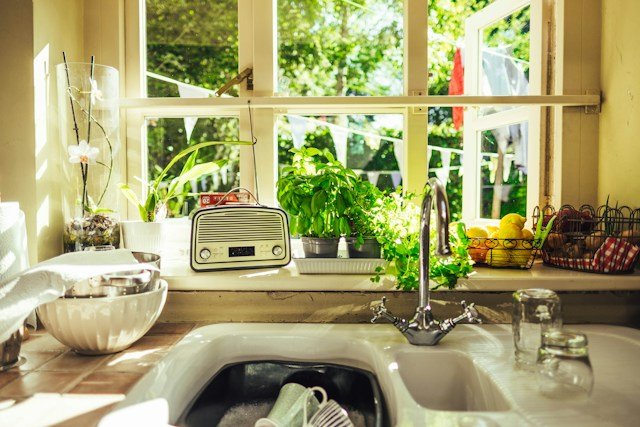
Even a small growing space helps. A pot of herbs on a sunny windowsill saves packaging and gives you something fresh. If you have outdoor space, native plants tend to need less water and care and can support local insects and birds. Collect rainwater where permitted for watering plants.
Choose a few plants you will actually look after rather than a crowded collection that will struggle. If houseplants appeal to you, our guide to low-maintenance houseplants covers easy options.
Five questions to ask before you buy anything
Most unnecessary waste starts at the moment of purchase. A short pause, built into the habit of shopping, can prevent many of the things that later end up in a drawer or a landfill. These five questions take less than a minute.
- Do I already own something that does this?Often the answer is yes, or close enough. Look at what you have before looking at what you could get.
- Will I still want this in a year?If the answer is a hesitant maybe, wait a week. Many impulses fade.
- Can I borrow, rent or buy it second-hand?Tools, party supplies and occasional-use items are especially good candidates.
- Is it built to last or be repaired?Look for sturdy materials, replaceable parts and a design that does not depend on one disposable component.
- What happens when I am done with it?If you know the answer, whether it can be passed on, recycled where you live or mended, you are already ahead of most shoppers.
You will not always be able to follow all five, and that is fine. The habit of pausing is what matters. Over time it makes you a more deliberate buyer, which is the foundation of an eco friendly lifestyle.
How to spot a misleading green claim
Marketers have noticed that many shoppers want to do the right thing, and some of them have responded with language that sounds green but means very little. This is often called greenwashing. You do not need to be an expert to spot the most common patterns. A few clues are enough.
Vague words like these are not automatically false, but they tell you very little on their own.
The first clue is vagueness. If a product says it is “eco-friendly” but does not explain how, treat the label with caution. Real claims tend to be specific: what the product is made from, how it is made, what it is certified for, or how it can be disposed of.
The second clue is a single feature standing in for the whole. A bottle made with some recycled content may still be wrapped in more packaging than it needs. A “natural” label does not make something automatically better, either, since plenty of natural things are harmful and plenty of synthetic things are useful and durable.
The third clue is a focus on newness. A product that encourages you to replace an item you already own is rarely the greenest option, whatever its packaging says. Look for companies that explain how to repair, refill or recycle their products, and that offer replacement parts. Where certifications are mentioned, check that they come from a recognized third party rather than from the brand’s own invented seal.
Eco friendly habits beyond the house
A lot of our environmental footprint is created outside the home, in the way we eat, travel and work. These areas are easy to overlook because they are not as visible as a recycling bin.
Getting around
Transport is one of the larger parts of most people’s footprint, and for many Americans the car is unavoidable. But even small changes can help. Combine errands into one trip instead of several. Walk or bike for short distances when it is safe and practical. Use public transport where it exists and works for you. If you are in the market for a vehicle, consider how much you will actually drive and what size you really need.
Food
Wasting less food is more effective than most other food-related changes, because all the energy and water that went into growing it is lost when it is thrown away. Beyond that, eating a bit more seasonally and locally when it suits you, and trying a few more plant-based meals if you enjoy them, can reduce your footprint without any sense of sacrifice. You do not have to change your whole diet. A single meatless dinner a week is a perfectly good start.
Work and digital life
If you work from home or in an office, consider paperless options, keep devices for as long as they work well, and recycle electronics properly instead of letting them pile up in a drawer. Even small things, like turning off screens and chargers at the end of the day, add up when repeated for years.

A year of small changes
Trying to change everything at once usually ends in burnout. A better approach is to treat the year as a series of gentle seasons, each with a few easy changes. By the end you will have built a whole set of habits without ever feeling overwhelmed.
Spring
- Clear out and donate what you do not use
- Plant herbs or a few pots
- Swap to refills for one cleaning product
Summer
- Line-dry clothes
- Shop at a local market
- Walk or bike for short trips
Autumn
- Mend clothes before cold weather
- Seal drafts around doors and windows
- Cook batch meals from seasonal produce
Winter
- Choose lights and heating carefully
- Give experiences or handmade gifts
- Review the year and keep what stuck
None of these steps is dramatic. That is the point. Eco friendly living is not usually a single big gesture. It is a long series of small, sensible decisions, repeated until they become the way you live.
Doing this without becoming that person
One of the less discussed challenges of green living is the social side. Nobody likes being lectured, and few people want to be the one who lectures. If you share a home or spend time with people who live differently, aim for quiet example over argument.
Keep the focus on your own choices and let them speak for themselves. If someone asks about a habit, share what you do and why, in plain language, without judgment. Invite rather than insist. When you are visiting someone else’s home or eating out, relax. A single meal or a single plastic cup is not going to define your impact, and being a gracious guest matters too.
And be kind to yourself. If you slip up, buy something you did not need or forget your bag, move on. Guilt rarely changes habits, and it burns people out. A slow, steady approach is more sustainable, in every sense of the word.
Slip-ups that quietly undo the good
A few patterns come up again and again for people who are enthusiastic about greener living. Knowing them in advance can save you time and frustration.
The first is buying too much too fast, the “eco haul” that fills a cupboard with items you never use. The second is throwing away working items to replace them with greener ones. The third is relying on recycling as a cure-all. Recycling helps, but the best result is not generating the waste in the first place, followed by reusing and repairing. The fourth is focusing on tiny details while ignoring the big ones. If you drive to the shop alone to buy a reusable bag, the trip probably outweighs the benefit. And the fifth is giving up when it feels imperfect. Imperfect action done for years is better than perfect action done for a month.
What this adds up to
The best eco friendly lifestyle tips share a few qualities. They start with what you already own. They focus on the changes that make the most difference for the least effort. They treat shopping as a decision rather than a reflex. They look past marketing language to the actual substance. And they are built on habits you can keep, not bursts of enthusiasm that fade.
You do not need a perfect home, a zero-waste jar or a complete lifestyle overhaul. Pick one habit from this guide, perhaps wasting a little less food or pausing before a purchase, and try it for a month. Then add another. A greener life is built slowly, one ordinary choice at a time, and it is far more likely to last that way.
Frequently asked questions
What are the easiest eco friendly lifestyle tips for beginners?
Start by wasting less food, using what you already own for longer and switching off lights and devices you are not using. These cost little effort and tend to make a real difference.
Is it better to buy new eco products or keep using what I have?
In most cases, keep using what you have until it wears out. New products have their own footprint from production and shipping, so replacing working items usually undoes some of the benefit.
How can I tell if a product is really eco-friendly?
Look for specific claims rather than vague words, check whether certifications come from independent organizations, and consider the whole product, including packaging and how long it will last.
Do small changes really make a difference?
Small changes matter most when many of them are repeated over time and when they replace larger habits. They also tend to lead to bigger decisions, as people become more thoughtful about what they use.
How can I live more sustainably in an apartment?
Focus on food waste, energy use, buying less and choosing durable things. A windowsill of herbs, smart storage and second-hand furniture all work well in small spaces, and you can find more ideas in our posts on small-space living.
How do I stay motivated without feeling guilty?
Choose one habit at a time, celebrate what you manage and let go of what you miss. Guilt tends to cause burnout, while steady, modest progress lasts longer.
What is greenwashing?
Greenwashing is when a company makes a product or practice seem more environmentally friendly than it really is, often with vague words, selective claims or invented labels.

Written by Rayhan Kobir Rayhan writes practical, calm guides about home, routines and everyday living at LifeWise Journal. This article shares general lifestyle ideas, not scientific, legal or professional environmental advice. Please follow your local recycling and waste guidelines.