
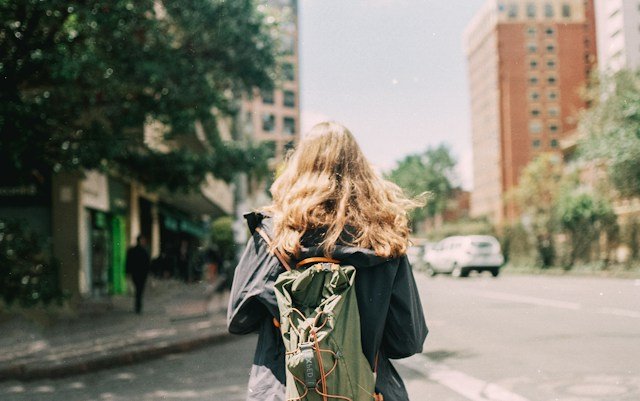
Solo Female Travel Advice for People Who Feel a Little Nervous and Want to Go Anyway
No fear-mongering, no bravado. Just the practical habits that make traveling alone feel manageable, and often a lot more fun than expected.
Almost everyone who thinks about a first solo trip feels two things at once. There is a quiet thrill at the idea of answering to nobody about where to eat, when to leave, or how long to stand in front of one painting. And right behind it comes a knot of worry, usually fed by a relative’s raised eyebrow, a scary headline, or a friend of a friend’s story. Both reactions are normal. A woman traveling solo is doing something that has become far more common than it used to be, and most trips end up being uneventful in the best possible way.
This guide is written for the nervous-but-curious version of you. It isn’t going to promise that nothing can ever go wrong, because no honest advice can. What it can do is walk through the habits that experienced solo travelers tend to share: how to pick a sensible first trip, how to prepare without overpreparing, where to stay, how to shape a day around daylight, and how to handle the occasional awkward moment without turning the whole trip into a worry exercise.
Think of the advice below as a set of defaults. You can bend any of it to fit your own comfort level, your destination, and your gut. The point is to arrive with enough of a plan that your attention is free for the interesting parts.
Start with a first trip that is easy to say yes to
The biggest mistake first-timers make is choosing a trip to prove something. A remote region, a language you don’t speak, a border crossing with complicated paperwork. Nothing is wrong with those places, but a first solo trip does a different job. Its main purpose is to teach you how you travel alone, and it’s much easier to learn that in an environment that is forgiving of small mistakes.
When you’re comparing options, a short filter helps. The more of these a destination checks, the gentler it tends to be for a first outing:
- Easy to reach. A direct flight or a drive of a few hours means fewer chances for a stressful arrival.
- Simple to get around. A compact, walkable center with dependable public transit or ride options removes a lot of logistics.
- Well used to visitors. Places with a steady flow of tourists tend to have clear signage, plenty of lodging choices, and staff who are used to questions.
- Comfortable language situation. If you can read the signs and ask for help in your own language, early confidence builds fast.
- Easy to shorten or extend. Flexible plans mean you can leave early or stay longer without penalty if the trip is going better or worse than expected.
For many American travelers, the easiest first step is a domestic city or a small town two or three hours from home. You already understand the culture, the phone works normally, and if something goes sideways you are not far from your own bed. A long weekend somewhere like that is a low-stakes experiment, and it often turns out to be enough to convince you that a longer, farther trip is within reach.

The quiet preparation that does most of the work
Preparation sounds like it should be a big, exhausting project. It really isn’t. A handful of small steps, done about a week before you leave, remove most of the situations that cause panic later. None of them are glamorous, and that’s the point.
First, tell someone you trust where you’re going and roughly what your plan looks like. This doesn’t need to be a minute-by-minute schedule. A shared note with your lodging address, flight details, and the general shape of each day is plenty. Having one person who knows where you’re supposed to be is a simple safety net, and it quietly makes you feel less alone, too.
Second, build a small digital backup. Photograph your ID, tickets, and reservations, and keep those images somewhere separate from your phone’s main gallery, such as a secure cloud folder or an email to yourself. Download offline maps for your destination so a dead signal doesn’t leave you guessing. Write down the address of your first night’s lodging on paper as well, because phones die at inconvenient times.
Third, read your government’s official travel advisory page for the region you’re visiting. It isn’t about talking yourself out of the trip. For most popular destinations it reads as routine, and the few specific cautions it does mention are worth knowing about before you land rather than after.
Finally, confirm how you’re getting from the airport or station to your first night’s lodging, and book that first night somewhere you can cancel if you need to. Arrival is the part of a trip with the most unknowns, so it deserves a little extra planning even when everything else is relaxed.
Pack in three layers, not one big bag
Where you keep things matters nearly as much as what you bring. A simple three-layer system means that losing or misplacing any single item never becomes a crisis.
On your body
Phone, a main card, a house or room key, and ID in a pocket or small crossbody you keep zipped. Only what you truly need within arm’s reach.
In your day bag
Water, a snack, a light layer, a portable charger, and a paper copy of your lodging address. Replaceable things, nothing irreplaceable.
Back at lodging
Your passport or backup ID, the second card, and spare cash stay locked away, not carried around all day.
The goal is that nothing you carry through the day is something you couldn’t live without. It also helps your mindset. When you aren’t clutching a bag stuffed with everything important, you tend to move through a street with more ease, and that relaxed posture is something people notice.
Choosing where to sleep
Your lodging is your base, and for a woman traveling solo, it sets the emotional tone of the whole trip. A comfortable, well-located place means you return each evening feeling settled instead of braced. It’s worth spending a little extra time here, and often a little extra money, because this is the one decision that affects every night of the trip.
Read recent reviews with a specific eye. You’re not looking for glowing adjectives so much as small, concrete details: whether other solo women mention feeling comfortable, whether the front desk is staffed at the hours you’ll arrive, whether the entrance and surrounding street are well lit. Reviews from the past few months matter far more than ones from years ago.
- Look for: a staffed front desk or a responsive host, secure door locks, a location near transit or a busy main street, and recent reviews that mention feeling comfortable arriving alone.
- Pay attention if: reviews repeatedly mention broken locks, an isolated location, poor lighting after dark, or staff who were dismissive when guests raised concerns.
- Consider: a higher floor, a room away from stairwells and shared entrances, and a quick check of how the neighborhood looks on a street-level map before you book.
- Keep flexible: a refundable or easily changed first night, so you can move on if the place doesn’t feel right in person.
If the first night’s lodging doesn’t feel right when you walk in, you’re allowed to leave. Nobody gives out prizes for sticking with an uncomfortable booking. Switching to a different place is a perfectly sensible use of an afternoon, and travelers who do it early usually have a better trip for it.
Getting there and getting around
Arrival day is the part that most deserves a plan, because you’re tired, carrying luggage, and still working out where everything is. Try to land or arrive during daylight if you can, since new places are almost always easier to read when you can see them clearly. Pre-arrange how you’ll reach your lodging, whether that’s a trusted ride service, an official taxi stand, a shuttle, or a train you’ve already looked up. Having the route settled in advance removes the temptation to accept help from whoever happens to be nearest.
Once you’re settled, use the first hour to orient yourself instead of sightseeing. Walk a short loop around your block, find the nearest pharmacy, grocery, and transit stop, and notice which streets feel busy and which feel quiet. That small bit of local knowledge pays off every time you head out afterward, and it turns an unfamiliar neighborhood into one you know a little.
When you’re moving around, let your phone’s map guide you, but try not to stand on a corner staring at it for long. Step into a shop or café doorway to check directions, then head off with a sense of purpose. Walking as though you know where you’re going, even when you’re not entirely sure, is one of the oldest and most useful bits of traveler’s habit.
Shape your day around the light
One of the simplest and most flexible rules in solo travel is to let daylight set the rhythm of your plans. It isn’t about being afraid of the dark. It’s about recognizing that most places feel easier to navigate, and most mistakes feel more forgivable, when you can see around you. A rough pattern looks like this:
This isn’t a curfew. Plenty of travelers happily enjoy evenings out, especially in lively areas with plenty of people around. The idea is simply that the first and last parts of your day, the stretches when you’re moving through unfamiliar streets, tend to go more smoothly when they happen in good light. As your confidence grows, you can stretch the pattern, and you will likely find your own version of it quickly.
It also helps to choose dinner spots before you leave your room. Having a place in mind, ideally within a short walk of where you’re staying, spares you from wandering around hungry and tired, which is when people tend to make rushed decisions.
Trusting your instincts without letting them run the trip
Almost every piece of solo travel advice eventually lands on the same sentence: trust your gut. It’s good advice, and it’s also a little too vague to be useful by itself. The real skill is telling the difference between a genuine signal and ordinary nervousness, because on a first trip, everything unfamiliar can feel slightly unsettling.
A useful way to think about it: nervousness is usually general and fades as you get used to a place. A real warning tends to be specific, tied to something you can point to, like a person who keeps following your route, a conversation that won’t end after you’ve clearly tried to end it, or a street that suddenly empties. When you notice a specific signal, act on it without apology. Cross the road, step into a shop, change direction, or head back to somewhere busy. You owe nobody an explanation for protecting your comfort.
Part of feeling steady is having a few ready-made lines for the awkward moments, so you aren’t improvising under pressure. Politeness is overrated when someone is pushing past your boundaries, and you can be firm and brief without being rude.
Rehearsing a couple of these lines in advance, even out loud in your room, makes them come out far more easily when you need them. Most of the time you won’t need them at all. But knowing they’re ready removes a lot of background worry.

Eating alone, and the loneliness nobody mentions
Two things worry many first-timers more than safety: eating alone and feeling lonely. Both are more manageable than they sound.
Eating by yourself is mostly a matter of choosing the right seat. A counter, a bar-height table, or a spot by the window gives you something to look at and keeps the experience relaxed. Many solo travelers make lunch their main meal, because daytime restaurants are usually quieter, cheaper, and less formal. A book, a notebook, or just people-watching fills the time easily, and you will likely find that no one is paying nearly as much attention as you imagined.
Loneliness is a bit harder, and it’s worth being honest about. Almost everyone feels a dip somewhere in the middle of a solo trip, often around dinner or on a gray afternoon, when a beautiful view has no one to turn to. That’s a normal part of the experience, not a sign that you’ve made a mistake. It usually passes on its own, and a few small habits can help it along: calling someone you love, joining a walking tour or a cooking class, sitting somewhere social like a communal table, or simply giving yourself permission to have an early night and a quiet room.
Group activities are underrated for exactly this reason. A half-day tour or a class gives you built-in company for a few hours, then lets you return to your own schedule afterward. You get the best of both worlds, and you often come away with a recommendation or two from people who have just been through the same streets.
Seven tiny rules for the road
If everything above feels like a lot to hold in your head, these short cards cover most of it. You could screenshot them or copy them onto a note in your phone.
What a good first solo trip tends to feel like
Many travelers describe a similar arc. The first day feels loud and slightly overwhelming. Every decision seems to land on you, and you notice yourself checking your bag more than necessary. By the second day, the pace settles. You’ve worked out where to get coffee, how to cross the busy street, and which direction your lodging lies in. Somewhere on the third day, there’s often a small, quiet moment, maybe an unplanned detour or a meal you ended up loving, when it hits that you’re enjoying your own company.
That shift is the real reward of traveling alone. It isn’t about proving bravery to anyone. It’s about learning that you can make decisions, handle small surprises, and have a good time on your own terms. Many people carry that confidence back home with them, and it quietly changes how they approach plenty of unrelated things.
When to adjust the plan, or skip it
Good solo travel includes the freedom to change course. If a destination turns out to feel wrong, you can shorten the stay, move to a different neighborhood, or head home early. That isn’t failure. It’s exactly the flexibility you built into the trip by choosing refundable bookings and a manageable itinerary.
If a specific region has a serious official travel warning, or you’re facing a health or personal situation that makes traveling alone unwise right now, postponing is a perfectly reasonable choice. A trip delayed by a few months is still a trip you get to take. Everything in this guide is general lifestyle advice, not a substitute for official travel advisories or professional guidance.
What this adds up to
Solo female travel advice can sound intimidating when it’s delivered as a long list of dangers. The more useful framing is simpler: choose a manageable first trip, prepare a little, stay somewhere you feel good about, let daylight shape your plans, and give yourself permission to say no. Do those few things, and most of the worry falls away before you’ve even left the airport. What remains is the part you went for: a different place, your own pace, and a growing sense that you’re more capable than you thought.
Frequently asked questions
Is it safe for a woman to travel alone?
For most popular destinations, millions of women travel alone without serious problems, but no trip is risk-free. Safety depends on the destination, your preparation, and the choices you make along the way. Reading official travel advisories and choosing a manageable first trip are good starting points.
What are the best safe travel tips for women going on a first solo trip?
Share your plans with someone you trust, arrive in daylight when possible, choose lodging with strong recent reviews, keep valuables spread across bags, and plan your evenings in advance. Trusting a specific uneasy feeling and leaving a situation is always acceptable.
Where should a woman traveling solo go for the first time?
Look for a destination that is easy to reach, simple to get around, used to visitors, and comfortable in terms of language. Many people start with a domestic city or a small town a few hours from home before trying anything farther.
How do I handle eating alone while traveling?
Choose a counter, window seat, or bar-height table, make lunch your main meal if evening dining feels awkward, and bring a book or notebook. Most diners are focused on their own meals, so you are likely to feel less noticed than you expect.
What if I feel lonely on a solo trip?
A dip in the middle of a trip is common. Join a walking tour or class, sit at a communal table, call someone at home, or give yourself a quiet evening. It usually passes quickly, and group activities offer company without giving up your independence.
Should I tell people where I’m staying?
Share your itinerary and lodging details with one or two people you trust. Be more careful about telling strangers where you’re staying, and feel free to politely decline when asked.
What should I pack for a short solo trip?
Pack light and split your items by layer: essentials on your body, replaceable items in a day bag, and backups kept at your lodging. A portable charger, offline maps, and a paper copy of your lodging address are especially useful.

Written by Rayhan Kobir
Home and lifestyle writer focused on practical, low-stress ways to plan a good weekend away.
This post reflects general travel habits and personal opinion, not safety, legal, or security advice. Always check official government travel advisories and local guidance for your destination.